

Exfoliation 101: Q&A.
Round 2.

We’re back with another exfoliation post! We did a fast 101 course here; today is the Q&A section.

Most of these are questions from the treatment room that I thought to jot down during client appointments. Others I’ve received at varying times via text or Instagram DM. An eclectic collection of sources!
Let’s quickly debrief. We’re talking the basics of exfoliation, which is generally the process of removing dead skin cells to keep the surface looking bright and even. We know there’s two primary categories: mechanical, and chemical. Mechanical (AKA “physical”) requires a little bit of work, often in the form of a face scrub if we’re talking homecare, or something like a dermaplane during a professional treatment.
On the flip side, chemical relies on acids or enzymes to work a little deeper than the skin’s surface. We’re likely looking at an AHA/BHA serum in our skincare lineup. When talking about professional treatments with chemical exfoliation, most providers favor enzyme masks and chemical peels.
Enough of a refresher? Let’s dive into our Exfoliation 101 Q&A (truly in no particular order).
** One quick housekeeping note: I mention a handful of products from professional lines, some that you have to purchase through a licensed professional. All of these products are marked with an * and you’re welcome to message me if you’d like to give them a try!
…
Are face scrubs off limits?
No! I love a facial scrub (or polish) and keep one in my shower to use once a week. You do want to be picky, though; scrubs that use larger particles, or ingredients like walnut shells or sugar, can create micro-tears in the skin. Pressure matters, too – the scrub should be the only thing doing any work. You’re using gentle, circular motions to work that product across the skin.
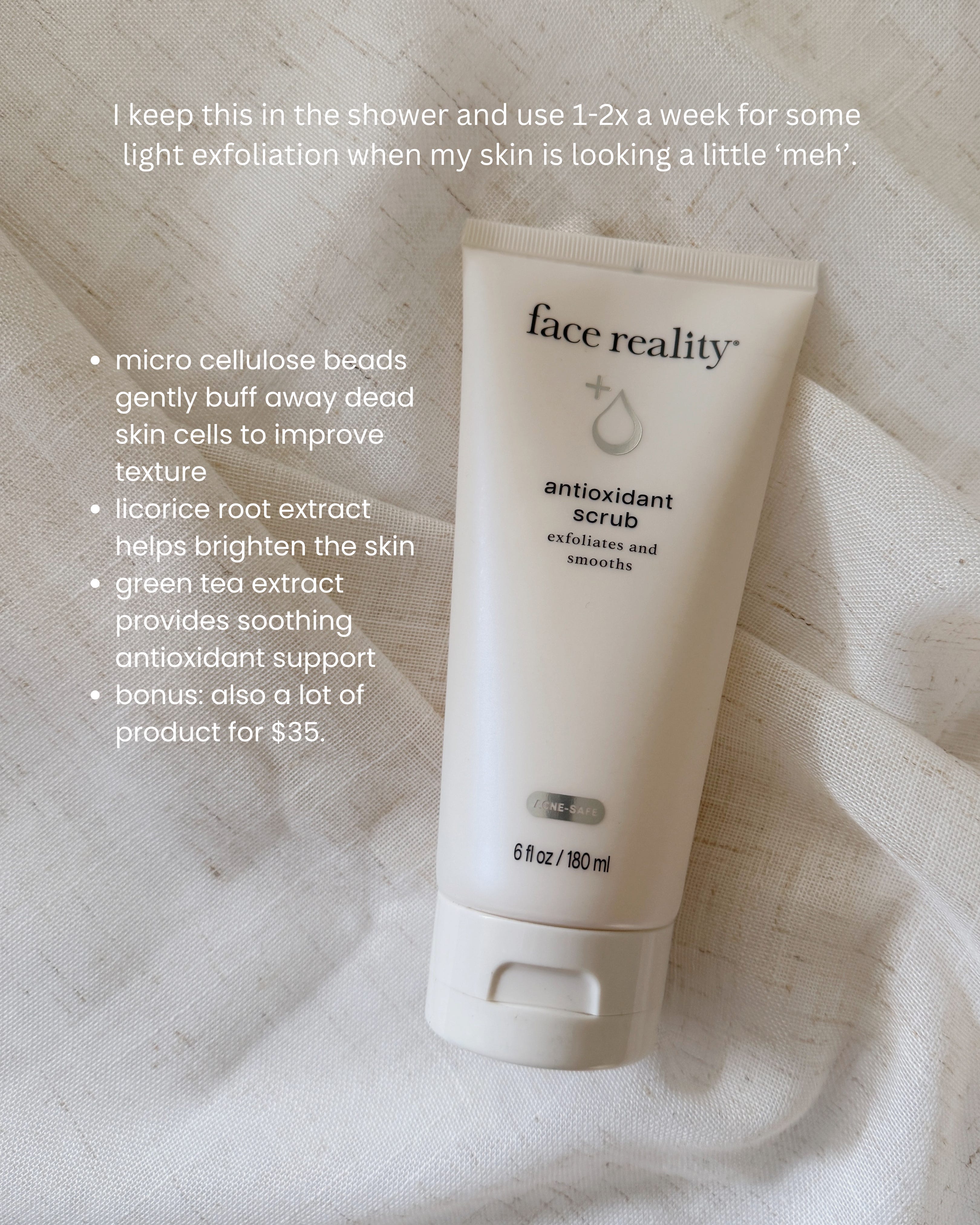
I’m partial to Face Reality’s Antioxidant Scrub* … it uses micro cellulose beads, and also has green tea extract to be a soothing agent for the skin.
When in my routine should I be exfoliating?
Always after cleansing. On days I’m going the mechanical route, I’m following my first cleanse (usually an oil) with the Face Reality scrub. On chemical days, I apply Mixi’s 15% Mandelic* serum to clean skin.
I never know if I’m supposed to exfoliate in the morning or evening. Or is it both?!
I tend to do my exfoliation in the morning because it’s all pretty gentle, and I use retinol at night. It’s easy to do too much, ya know? But I have clients who prefer nighttime, and I’m cool with it because of how it fits with the rest of the routine.
* If you prefer the AM, emphasizing here that SPF is hyper important because exfoliating products make your skin even more sensitive to the sun!
How often should we be exfoliating?
We’re definitely limiting any scrub usage to 1-2 times/week. Chemical frequency is totally dependent on your skin and what it can handle! Exfoliants you’d be using in an at-home routine are typically a low enough percentage that can be used most days, if not daily. I’m able to use my mandelic acid serum – Mixi’s 15% – basically every day (exceptions for pre/post chemical peels, microneedling, lasers, etc.). But also know it takes time to create daily tolerance with any sort of exfoliant! My general advice for most of my clients is to start with 2 times/week, and slowly build up to daily use if their skin is handling it well.
Not a question, but forever chasing the high of St. Ives Apricot Scrub. 😭
Girl, aren’t we all! My 36-year-old self is horrified at 1) how often I used that (everyday?!?), and 2) how aggressive my scrubbing was. But the Face Reality scrub is so much better, I promise.
Should I exfoliate at home before coming in for a facial?
Love this question! Most professional treatments have exfoliation baked in, even if it’s an ultra gentle enzyme, so there’s no need to exfoliate prior to. It’s no biggie if you’re in flow state the morning of a facial and do your full routine, though – just communicate with your provider when you arrive to your appointment. 🙂
How will I know if I’ve done too much exfoliation?
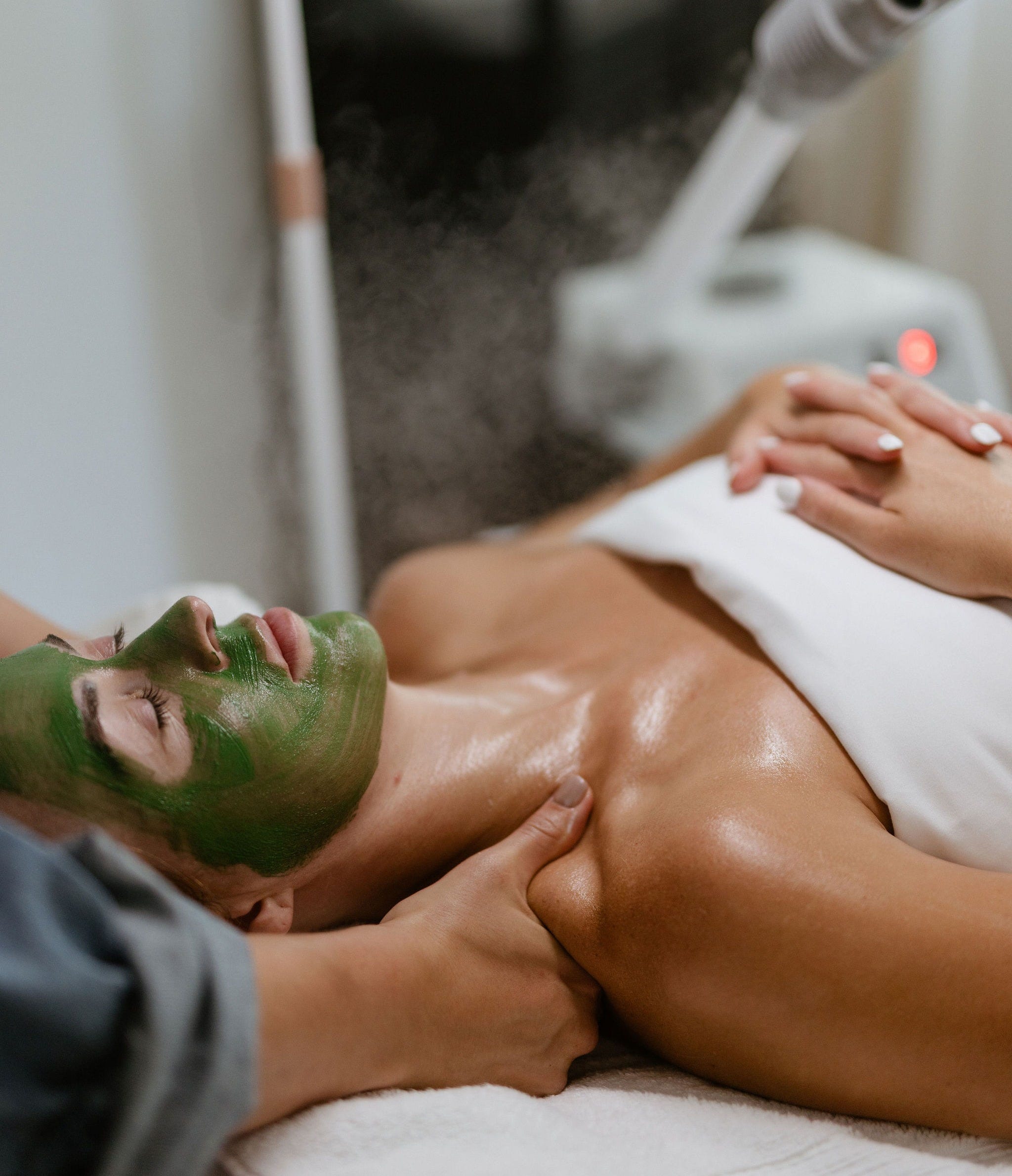
Our skin does a great job of letting us know when the barrier is feeling stressed. For me, I know I’ve gone overboard if there’s a stinging feeling or slight burn when I apply my exfoliant. Other signs might be redness or a tight feeling, or even a few small breakouts. Never panic, over-exfoliating is fixable! If this happens, all you need to do is give your skin a few days break from exfoliants.
I have rosacea and sensitive skin – can I still use exfoliating products?
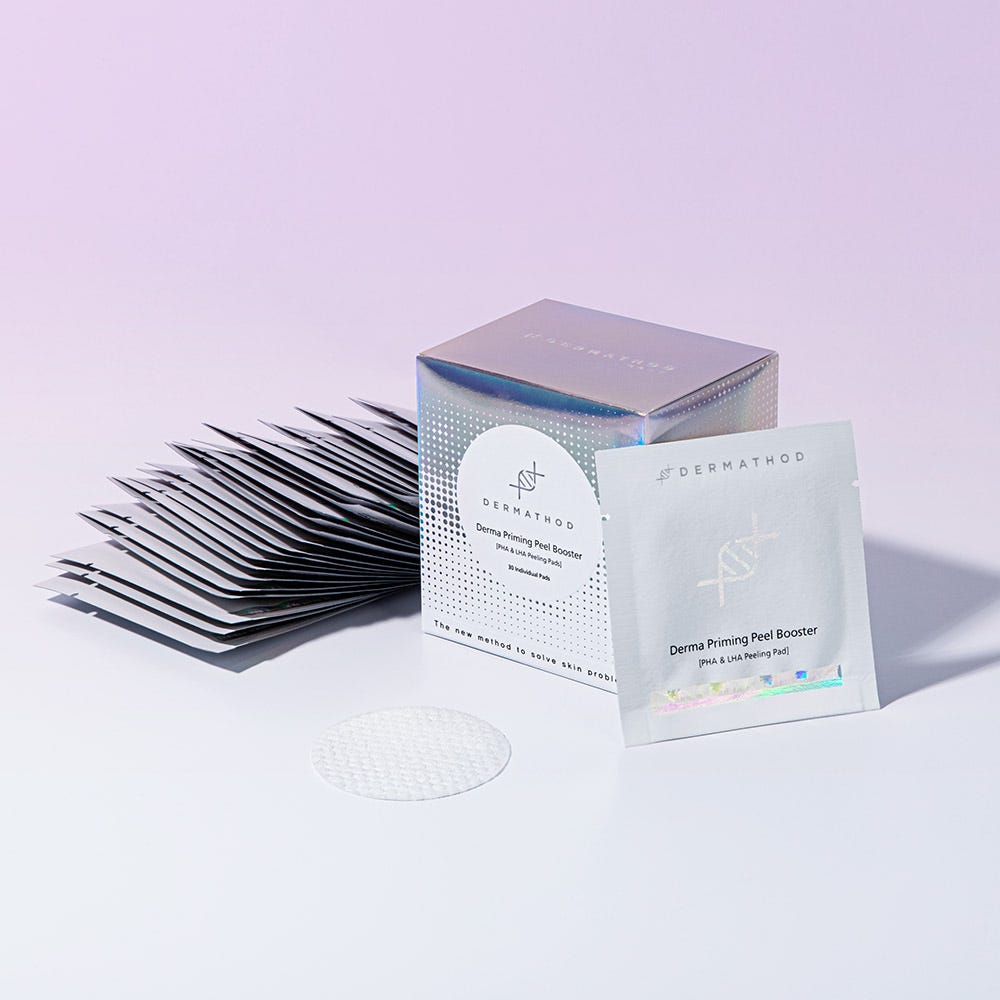
For sure, but carefully. I’m sort of in the same boat with my reactive skin and rosacea, too. I still use a scrub once a week, but for more serious rosacea cases, that’s not going to feel nice. For my sensitive skin peeps, I really love a gentler exfoliant like a PHA (polyhydroxy acid), which is hydrating and gentler than an AHA or BHA. These Dermathod peel pads* are a favorite in my clients’ routines (as well as mine).
My boyfriend has darker skin, but I feel like he needs some exfoliation in his (very basic) skincare routine. Help?!
The boys are doing skincare, too, and we love it! The key thing to know with darker complexions is that the skin is much more prone to post-inflammatory hyperpigmentation. You’ve probably seen this noted as PIH, and what it really means is irritation or inflammation that creates a darker spot on the skin; we see this a lot when healing acne.
When we’re talking about exfoliation for more melanated skin tones, a gentle scrub is always a nice gateway. AHAs are incredible as a chemical option because they also help reduce PIH over time, too.
OK, last one, folks!
If I’m using a retinol at night, can I still incorporate an exfoliating product in to my routine?
You know it! But we want to be strategic. You can 1) begin working in your exfoliating product after cleansing in the morning (this is what I do), or 2) alternate nights between your retinol and exfoliator.
…
That’s it! Thanks so much for making it this far. Happy weekend!